

An IIT Madras study reveals that financial cybercrime victims in India are often highly educated professionals, challenging the notion that only careless or financially unaware individuals are targeted. The research highlights that digital literacy doesn't guarantee protection, as fraudsters exploit stress and emotional vulnerabilities.

Cathy Li, Head of the Centre for AI Excellence at the World Economic Forum, advocates for integrating AI literacy into India's education curriculum and incentivising AI companies to prioritise child safety. She stresses the need for localised solutions that account for India's linguistic and cultural diversity, as well as varying levels of connectivity and digital literacy, to ensure AI systems are safe and beneficial for children.
The HUMAIN AI Literacy Mission (HAILM) has been launched in India to integrate structured artificial intelligence education into schools nationwide. The initiative provides an age-appropriate AI curriculum for Classes 3-12, teacher training, and digital learning resources, aiming to equip students and educators with responsible AI understanding.

Computer-based testing can make the examination more secure and transparent. Ensuring equal opportunities to prepare will make it fair as well. India needs both, suggests Dibyasree Ganguly.
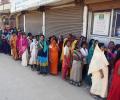
Meghalaya has shown significant progress in digital transactions and financial inclusion, recording 32.76 crore digital transactions and nearly 10 lakh Jan Dhan accounts by 2025-26. Efforts like the JAM Trinity and financial literacy programmes have expanded banking access, with a high percentage of bank account holders adopting digital modes. The next phase focuses on enhancing financial literacy and cyber resilience, especially in rural areas.

The National Skill Development Corporation (NSDC), in collaboration with Amazon Web Services (AWS) and Cultus Education, has launched a nationwide initiative to provide cloud and AI skilling to 1.5 lakh learners. This programme aims to equip youth, especially from Tier 2 and Tier 3 cities, with essential technology skills and job-ready training, contributing to India's goal of becoming a global innovation hub.

The Karnataka government has introduced a draft policy to address the growing concerns surrounding excessive and unsafe digital technology use among students, focusing on mental health, cyber safety, and responsible digital behaviour.
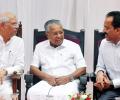
Kerala has become the first state in India to achieve complete digital literacy, according to Chief Minister Pinarayi Vijayan. Over 2.5 lakh volunteers contributed to this milestone, which included people of all age groups. The state plans to launch the second phase of the project soon, making all personal documents available in DigiLockers.

A two-day weekend would help employees recover physically and mentally. They would return better prepared for branch work that demands patience, judgment, and accuracy, asserts Tamal Bandyopadhyay.

India is developing a 'Gross Domestic Knowledge Product' (GDKP) to identify and define its knowledge assets, a move aimed at safeguarding them amidst global efforts to monetise and 'weaponise' knowledge, according to NITI Aayog member R Balasubramaniam.

Opposition leaders have questioned how caste responses will be recorded without state-wise pre-prepared lists.

In addition to caste details, the Census will, for the first time, collect personal information such as the total number of bank accounts held by individuals, along with their mobile number, Aadhaar number, voter ID number, passport number and driving licence status, according to the 40 questions notified by the Registrar General of India on Friday.

Karnataka is rolling out the first batch of 2,000 indigenously developed AI-ready KEO PCs, priced at Rs 18,999, to rural libraries and educational institutions. This initiative aims to extend artificial intelligence and digital literacy beyond urban centres, supporting students with AI skills, spoken English, and competitive exam preparation, even in areas with limited internet connectivity.

The Centre has notified 40 questions for the upcoming Census 2027, including caste and place of Covid vaccination, marking the first time caste details will be collected as part of the decadal exercise. The population enumeration will be a fully digital process, with an option for self-enumeration.

Finance Minister Nirmala Sitharaman urged PSBs to become 'cool' and shed their 'government bank' image to attract young customers.

Population Foundation of India welcomes the digitisation of the Census but emphasises the need for inclusivity, data security, and addressing the under-reporting of women's contributions.

Gaganyaan astronaut Prasanth Balakrishnan Nair stressed the critical importance of AI sovereignty for national cybersecurity, citing the increasing difficulty in distinguishing between real and fake content due to AI. Speaking at the Kerala Cyber Suraksha Summit, Nair highlighted that future conflicts and industries would involve a 'whole-of-nation approach,' blurring physical and digital boundaries. He urged greater awareness of digital threats and emphasised India's need to build on its technological capabilities in AI and cybersecurity, drawing parallels with the success of Chandrayaan-3. Other speakers also underscored the rising threat of cyberattacks and the potential for Kerala to contribute to national technology requirements.

Chief Economic Advisor V Anantha Nageswaran highlights the challenges of digital access, data governance, interoperability, and cyber security in India's digital public infrastructure (DPI), despite its world-class scale.

Chief Election Commissioner Gyanesh Kumar has affirmed that Indian electronic voting machines (EVMs) are manufactured by public sector companies and operate without internet, Bluetooth, or Wi-Fi connectivity, ensuring their security and reliability.

Education experts are advocating for the integration of artificial intelligence (AI) education in schools, emphasizing the need for age-appropriate implementation, data privacy awareness, and the use of vetted AI tools within secure school environments.

When a student asks AI to explore an idea, challenges its response, asks for alternatives, improves the output and decides what is worth retaining, the student is practising behaviours that are central to leadership, says Jaspreet Bindra, co-founder and CEO of AI & Beyond, an organisation promoting AI literacy.

15 states have rolled out unconditional cash transfer schemes for women, with an estimated annual outlay of around Rs 1.7 trillion covering nearly 120 million beneficiaries.

'Applying AI to change the lives of Indians and at population scale -- just like we did with DPI [digital public infrastructure] -- is really where it's going to go.'
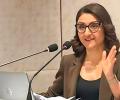
"It's easier, easier than ever now to impersonate someone, to create deep fakes, to manipulate images, to misuse personal data. And most women, unfortunately, we don't know how to fight back," says Soha Ali Khan.

The question for the next 20 years is not whether India can become a $5 trillion or $10 trillion economy. Those are attractive targets, but the real question is whether India can create enough productive jobs, educate its children properly, make its cities liveable, and give hundreds of millions of people a substantially better life, asserts Ramesh Menon.

'Tightening of visa norms for international students around the world are a concern for the university and the education sector, even as the UK continues to offer relatively attractive post-study work opportunities compared to several competing markets.'
Punjab School Education Board announces integration of Artificial Intelligence as a core component of the school curriculum, with learning outcomes reflected on student certificates.
Union Education Minister Dharmendra Pradhan launched an artificial intelligence and computational thinking curriculum for classes 3 to 8, aiming to integrate structured AI education into the school system.
Haryana is revamping its 2015 Sports Policy to focus on long-term talent development for future Olympians, moving beyond just prize money and jobs. Key initiatives include 'Mission Olympics-2036 Vijayee Bhavah' for young athletes and the 'Khelo Haryana App' for integrated athlete services. The state aims to strengthen athlete welfare, infrastructure, and institutional support.
The National Commission for Women (NCW) has submitted a comprehensive set of recommendations to various central ministries, outlining a survivor-centric framework to enhance care, justice, and rehabilitation for acid-attack victims.

A joint study by IBM and IndiaAI, a MeiTY initiative, indicates that Artificial Intelligence (AI) has the potential to contribute over USD 500 billion to India's economy by 2030. The report highlights the need for improved AI literacy, infrastructure, and data quality to fully realise this potential.

Shikhar Dhawan believes Rohit Sharma and Virat Kohli will have enough match practice to be in top form for the 2027 World Cup, despite reduced match frequency.

The Union Cabinet on Friday approved Rs 11,718 crore for conducting the Census of India, 2027, which would include the caste enumeration for the first time.
Union Education Minister Dharmendra Pradhan announced that all high schools in India will have broadband internet connection within the next 2-3 years, with a focus on integrating Artificial Intelligence (AI) into education.
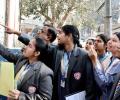
The fee cuts come amid an outcry over CBSE's first full-scale rollout of the Online Scoring Mechanism for Class 12 examinations, with students, parents, and some teachers alleging unusually low marks, unchecked answers, and discrepancies between expected and awarded scores.

India has launched its first integrated phygital service centre in Umri village, Madhya Pradesh, aiming to provide online services and boost rural development through digital connectivity and various essential services.

Kerala's voters are sophisticated, educated, and unforgiving. They have once again made it clear that no government is entitled to remain in power. The Congress would do well to remember this, points out Ramesh Menon.

The Ministry of Education has dismissed concerns about On-Screen Marking (OSM) affecting students' scores in CBSE class 12 exams and announced a reduction in revaluation and answer sheet verification charges to ease student anxiety.

Kerala Infrastructure and Technology for Education (KITE) has published the 'Cyber Safety Protocol 2026' to ensure a secure digital learning environment and robust cyber defences for students in Kerala's public school system.
